
Why Life Skills Matter for Long-term Recovery and Independence
Recovery is about more than overcoming substance use. For many young people, it also involves learning how to navigate everyday life with confidence, build healthy routines and develop the skills needed to live independently.
Practical life skills play an important role in this process. They help young people manage daily responsibilities, make informed decisions and build confidence in their ability to handle challenges as they arise.
For young people who have experienced adversity, disrupted education, family instability or periods of disengagement, developing these skills can be an important step towards creating a more stable future.
What Are Life Skills?
UNESCO describes life skills as a combination of knowledge, behaviours, attitudes and values that help people navigate challenges, communicate effectively, solve problems and work towards their goals.
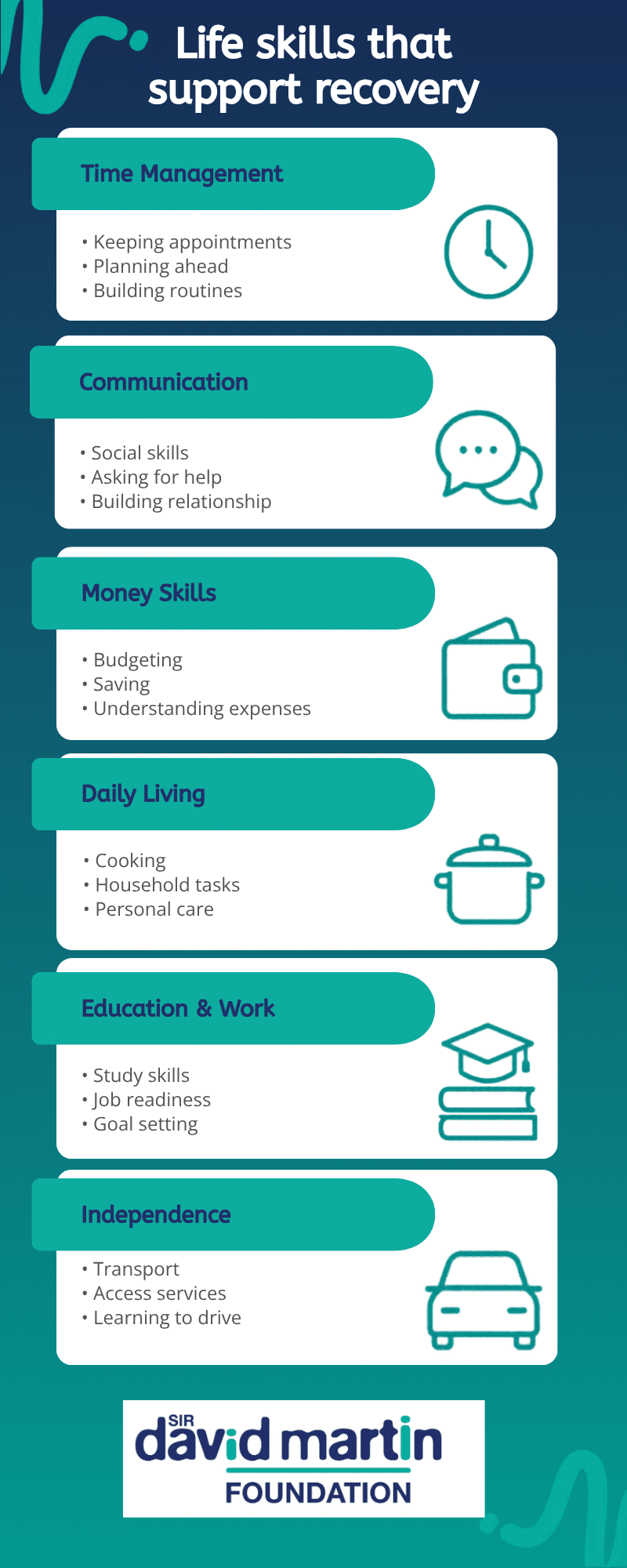
These can include:
- Cooking and meal preparation
- Budgeting and managing money
- Time management and organisation
- Communication and relationship skills
- Personal hygiene and self-care
- Household responsibilities
- Using public transport
- Applying for jobs and attending interviews
- Making appointments and managing personal responsibilities
Life skills can support greater independence and help young people participate more confidently in education, employment and community life.
Building Confidence Through Everyday Skills
Learning life skills is not simply about completing tasks. It is also about developing confidence.
When a young person learns how to budget, prepare meals, attend appointments independently or manage their own schedule, they begin to develop a stronger sense of capability and self-belief.
Small achievements often create momentum. Successfully completing everyday responsibilities can help young people feel more prepared to take on larger challenges, whether that involves returning to study, seeking employment or rebuilding relationships.
Confidence built through practical experience can become an important foundation for long-term recovery.
Life Skills and Recovery Often Go Hand in Hand
Recovery often involves creating new routines and habits that support wellbeing.
Without structure, young people may find it difficult to maintain positive changes over time. Practical skills help create that structure by providing a framework for daily life.
Managing finances, preparing healthy meals, attending appointments, maintaining living spaces and organising daily responsibilities all contribute to a greater sense of stability.
Many youth-focused recovery programs recognise that developing these practical skills can be an important part of supporting long-term outcomes.
Opportunities to build confidence, resilience and independence can help young people move forward with greater self-belief and purpose.
Preparing for Greater Independence
The transition into adulthood can be challenging for any young person.
For those who have experienced significant challenges, additional support may be needed to develop the skills required for independent living.
According to the NSW Department of Communities and Justice, life skills such as budgeting, cooking, household management, communication, time management and accessing services are important building blocks for independence. The department notes that some young people may require additional guidance and opportunities to develop these skills gradually over time.
Developing practical life skills can help young people feel more prepared for adult responsibilities while also improving their ability to engage with education, employment and community life.
Life Skills Can Help Young People Work Towards Their Goals
Recovery often involves looking beyond immediate challenges and thinking about the future.
Whether a young person hopes to return to education, find employment, secure stable housing or improve their wellbeing, practical life skills can help them take positive steps forward.
According to headspace, setting goals can help young people stay motivated, build confidence and focus on what matters most to them. Breaking larger goals into smaller, manageable actions can make progress feel more achievable while creating opportunities to learn and celebrate success along the way.
Skills such as time management, communication, problem solving and organisation are not only useful in everyday life, they can also support young people as they work towards personal, educational and career goals.
By developing these capabilities over time, young people can gain greater confidence in their ability to make decisions, overcome setbacks and continue moving forward.
Learning Happens Through Experience
Life skills are rarely learned through theory alone.
Young people often develop these abilities through practice, repetition and real-world experiences. Cooking meals, managing responsibilities, participating in education or volunteering, learning to drive and engaging with community activities can all contribute to personal growth and skill development.
Programs such as Mission Australia’s Triple Care Farm recognise the importance of practical learning. Alongside counselling and therapeutic support, young people have opportunities to develop everyday living skills, participate in education and vocational training, and build the confidence needed to navigate life beyond treatment.
Supportive environments that encourage young people to try new things, learn from mistakes and celebrate achievements can make a meaningful difference.
Even small successes can help reinforce positive habits and increase confidence over time.
Supporting Long-term Outcomes
Long-term recovery is not defined by a single milestone. It is often built through a series of positive steps that create greater stability, confidence and independence.
Life skills help young people navigate everyday challenges, build healthy routines and develop the confidence needed to pursue their goals.
While every recovery journey is different, practical skills can provide an important foundation for future education, employment, relationships and independent living.
By supporting young people to develop these abilities, we help create opportunities for long-term growth, resilience and positive change.