
Why NSW Is Tightening Nangs Laws and What It Means for Young People
Nitrous oxide, commonly known as nangs or laughing gas, has legitimate uses in medicine, food production and industry. However, concern has grown about recreational misuse, particularly the availability of large cylinders and the risks linked with repeated or heavy use.
From November 2026, NSW will tighten controls on who can buy nitrous oxide, retail sales volumes, supply times, delivery and product displays. The aim is to reduce easy recreational access while improving awareness and access to support.
Why is NSW Tightening Nangs Laws?
NSW is tightening laws around the sale of nitrous oxide (“nangs”) to help reduce misuse, particularly among young people. The changes aim to limit recreational access while encouraging greater awareness of the health risks and the importance of accessing youth drug and alcohol resources in Australia for education, prevention and support.
The NSW Government’s official announcement says the growing availability of large cylinders has enabled heavier use and contributed to serious neurological injuries, including spinal cord damage. The reforms will restrict retail volume, prohibit supply to people under 18 and reduce the rapid and late-night access that can make nangs easy to obtain recreationally.
Legislation alone cannot address every reason a young person may use a substance. Prevention also requires accurate drug education, non-judgemental conversations and accessible support. The Alcohol and Drug Foundation’s review of nitrous oxide harm reduction recommends providing young people with clear, evidence-based information about nitrous oxide, alongside accessible pathways to support.
What are Nangs?
Nangs are small bulbs or larger canisters containing nitrous oxide, a colourless gas used for sedation and pain relief. It is also used as a propellant in whipped cream dispensers and for some industrial purposes.
When misused recreationally, nitrous oxide is inhaled for brief effects that may include euphoria, light-headedness, numbness, confusion and reduced coordination. Because the effects generally last only a few minutes, some people may use it repeatedly.
The product’s legal commercial uses and familiar packaging can create the impression that it is harmless. Legal availability, however, does not mean recreational use is risk-free. The Alcohol and Drug Foundation’s nitrous oxide facts explain that serious acute and long-term harms can occur, particularly with frequent or high-volume use.
What Exactly is Changing in NSW?
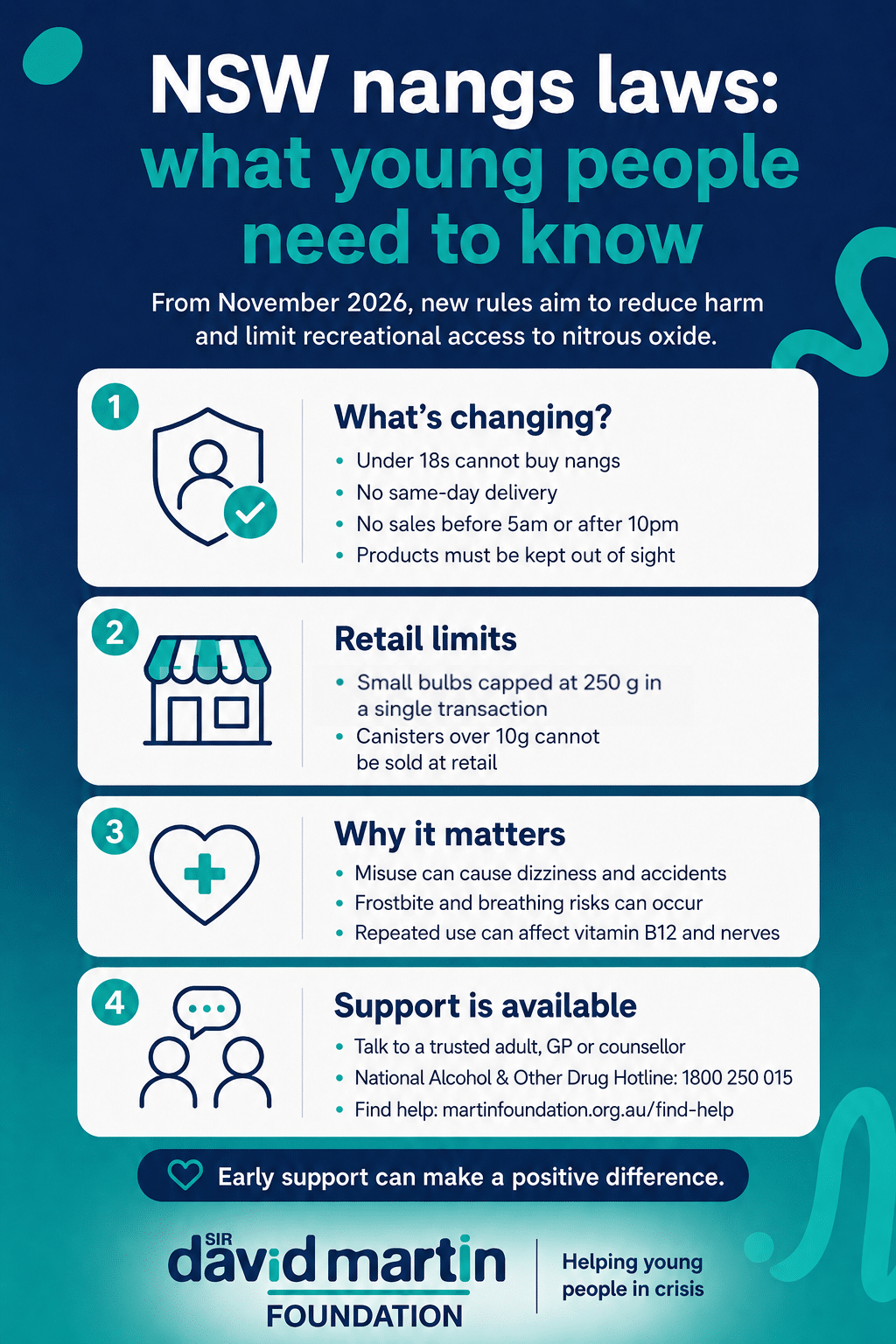
The new requirements are due to begin in November 2026 under the Medicines, Poisons and Therapeutic Goods Regulation 2026.
The reforms will:
- prohibit retail supply to anyone under 18
- limit small bulbs containing 8 to 10 grams to 250 grams in a single transaction
- ban retail sales of canisters or cylinders containing more than 10 grams
- prohibit same-day delivery and supply
- restrict sales before 5am and after 10pm
- prevent products being visibly displayed to customers.
Maximum penalties will be $2,200 for individuals and $11,000 for corporations per offence. Exemptions will remain for legitimate food and beverage, therapeutic, industrial and commercial uses.
What are the Health Risks of Nitrous Oxide Misuse?
Risk varies according to the amount and frequency of use, a person’s health and whether alcohol or other drugs are involved. Serious harm is more commonly associated with frequent, repeated or high-volume use, although acute injuries can also occur.
Short-term effects can include dizziness, confusion, impaired coordination and fainting. These may increase the chance of falls and other accidents. Insufficient oxygen can cause hypoxia, while the extremely cold gas can cause frostbite or cold burns. NSW Health also identifies lung injuries, cardiac abnormalities and asphyxiation among the potential harms.
Repeated use can interfere with the body’s ability to use vitamin B12, which is essential for healthy nerve function. This can contribute to numbness, weakness, difficulty walking and damage to the brain, nerves or spinal cord. A 2026 adolescent case series and systematic literature review also highlighted neurological damage associated with chronic misuse in young people.
Regular use may also be associated with psychological dependence, depression and, in some cases, psychosis. Separately, physical symptoms such as persistent tingling or numbness, weakness, difficulty walking, confusion, loss of consciousness, chest pain or breathing problems require prompt medical attention.
The NSW Health nitrous oxide fact sheet also warns that taking a B12 supplement does not prevent harm and should not replace medical assessment. Anyone experiencing concerning symptoms should seek medical advice promptly. In an emergency, call 000.
What Do the New Laws Mean for Young People?
The immediate change is reduced retail access, especially for people under 18. The broader message is that a legal or familiar product can still cause harm when used in a way it was not designed for.
Young people need information that is accurate enough to support informed decisions without shame or scare tactics. Parents, carers, schools and youth workers can help by explaining why the laws are changing, checking information against reputable sources and making it clear that asking for help will be met with support.
Concerns may arise when use becomes more frequent, involves larger quantities or continues despite physical, emotional, school, work or relationship problems.
Why Early Intervention Matters
Early intervention does not mean assuming that one episode of substance use is an addiction. It means responding when concerns first appear, before related problems become more serious.
A useful first step is a calm conversation. Choose a private time, describe what you have noticed and ask open questions. Listening without judgement can make it easier for a young person to speak honestly about what is happening and what support they may accept.
Professional help can then be matched to the young person’s needs, including a GP, counsellor, youth mental health service, community alcohol and other drug service or residential program.
If you are looking for trusted youth drug and alcohol resources in Australia, explore Sir David Martin Foundation’s support information and youth programs. Early support can create more options and help prevent concerns from escalating.
Where Can Young People Find Drug and Alcohol Support?
Sir David Martin Foundation’s Find Help directory brings together national and state alcohol and drug services, youth mental health support, family services and crisis contacts.
The National Alcohol and Other Drug Hotline provides free, confidential support on 1800 250 015. Young people can also contact headspace for mental health and alcohol and other drug support. Families concerned about a loved one’s substance use can contact Family Drug Support.
For Australians aged 16 to 24 experiencing problematic substance use, Triple Care Farm provides youth-specific withdrawal, residential rehabilitation and aftercare. Sir David Martin Foundation is a major funder of the Mission Australia program, which combines medical and psychosocial support, counselling, education, living skills and assistance with returning to the community. These integrated services demonstrate why youth-specific addiction treatment matters in recovery, particularly when substance use intersects with mental health, education, housing or family challenges.
The Youth Network expands six months of aftercare across several youth residential services, helping young people reconnect with family, healthcare, education, employment and stable community supports.
How Families and Communities Can Help
Support begins with the way adults respond. Families can learn the facts, discuss risk without moralising, ask about the young person’s wellbeing and encourage professional help when concerns arise.
Schools and community organisations can provide age-appropriate education, recognise warning signs and maintain clear referral pathways. They can reduce stigma by treating substance use as a health and wellbeing concern.
Building a Safer Future for Young Australians

The NSW nangs laws are designed to reduce easy access and limit conditions that enable high-volume recreational use. They will not remove every risk or replace education, prevention and treatment.
A stronger response brings these elements together. Young people need clear facts, trusted adults, accessible healthcare and youth-specific services that recognise the wider circumstances influencing substance use.
Sir David Martin Foundation supports best-practice youth recovery initiatives, including Triple Care Farm and Youth Network, to give young people safety, hope and opportunity. Every young person deserves the right support at the right time. Learn more about the Foundation, apply for Triple Care Farm or support its work.
Frequently Asked Questions
What are nangs?
Nangs are bulbs or canisters containing nitrous oxide. The gas has legitimate medical, food and industrial uses but is also sometimes inhaled recreationally for a brief high.
Why is NSW changing its nangs laws?
NSW is introducing tighter controls to reduce inappropriate retail access, particularly among young people, and respond to health concerns linked with repeated and high-volume misuse.
When do the new NSW nangs laws begin?
NSW Health says the new restrictions will begin in November 2026.
Are nangs dangerous for young people?
Not everyone who uses nitrous oxide experiences serious harm, but misuse can cause acute injuries and repeated use can contribute to vitamin B12 disruption, nerve damage and spinal cord injury.
What signs may suggest a young person needs help?
Signs may include more frequent use, cravings, increased spending, changes in mood or behaviour, declining participation in school or work, physical symptoms and continued use despite negative consequences.
What youth drug and alcohol resources are available in Australia?
Support includes GPs, community alcohol and other drug services, counselling, youth mental health services, family support, withdrawal programs, residential rehabilitation and aftercare. The Foundation’s Find Help directory links to national and state services.